Thailand Remittance Destinations: Send Money to Myanmar in 2026

The Thailand-Myanmar Money Corridor in 2026
In Southeast Asia, Thailand stands out as a significant source of remittances, particularly to Myanmar. With over two million Myanmar migrants working in Thailand's factories, construction sites, farms, and homes, the remittance corridor is bustling. These workers send money back to support their families, contributing hundreds of millions of dollars annually. Despite the corridor's size, many still rely on outdated and risky methods for transferring money across borders. This guide will help you navigate the channels, costs, paperwork, and safer alternatives to ensure your money arrives securely, swiftly, and with minimal fees.
Who Is Sending Money and Why It Matters
Myanmar migrants in Thailand are the backbone of this remittance corridor. According to IOM data, 72% of these migrants send money home annually, with women participating slightly more than men—75% compared to 70%. These senders work long hours in challenging conditions, sending money to cover daily needs, medical expenses, and educational fees for their families. Understanding the demographics and needs of these senders is crucial in 2026, as it shapes the services that remittance providers should offer—affordable transfers, reliable delivery, and straightforward processes for those with limited banking access. For businesses looking to facilitate these transfers, check out our money transfer solutions.
Formal vs. Informal Channels: What Senders Need to Know in 2026
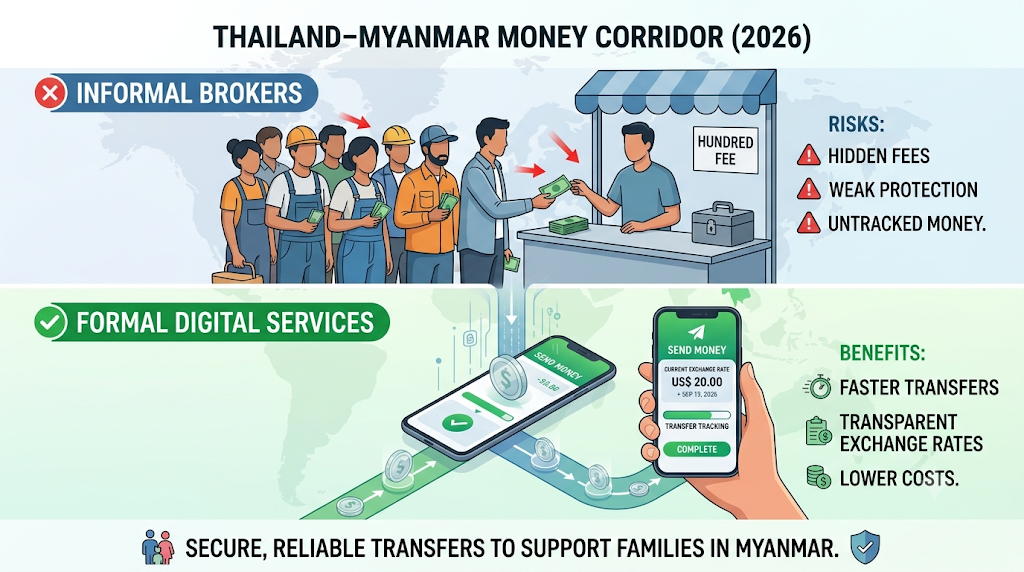
Despite advancements, most Myanmar migrants in Thailand continue to use informal channels. IOM data reveals that 93% of migrants opt for informal methods, with 60% relying on hundi brokers, while only 37% use formal channels like bank transfers. The preference for informal brokers stems from their convenience, trustworthiness, and minimal paperwork requirements. However, these channels carry significant risks, such as fluctuating exchange rates, potential loss of funds, and lack of legal protection. By 2026, formal digital remittance services have significantly improved, offering faster, cheaper, and more secure options. Transitioning to licensed providers like DeeMoney is now a smarter choice.
How to Send Money from Thailand to Myanmar with DeeMoney
Sending money with DeeMoney in 2026 is straightforward. Here's how:
- Create an account – Sign up on the DeeMoney app or website using your ID.
- Verify your identity – Complete a quick KYC check with your passport or work permit.
- Enter transfer details – Provide the recipient's information and the amount to send.
- Choose your payment method – Pay via bank transfer or cash at a DeeMoney agent.
- Confirm and send – Review the exchange rate and fees, then confirm.
Your recipient receives the money quickly and securely, with full transaction tracking available.
Exchange Rates, Fees, and Hidden Costs
In 2026, exchange rates between Thailand and Myanmar fluctuate frequently, and small differences can accumulate significantly over time. DeeMoney offers transparent rates with no hidden fees, ensuring what you see is what your family receives. Be mindful of common cost traps:
- Poor exchange rate margins – Some services advertise "zero fees" but profit from rate differences.
- Agent commissions – Informal brokers may take a cut without disclosure.
- Transfer limits – Sending smaller amounts more frequently can increase total costs.
Always verify the total amount your recipient receives, not just the upfront fee, to understand the true cost of any transfer. For more information on our competitive rates, visit our currency exchange services.
Thailand Remittance Destinations: Where the Money Goes in Myanmar
In 2026, remittances from Thailand are directed to several key regions in Myanmar. Kayin State receives the largest share due to its proximity to the Thai border. Other major destinations include Yangon, Mandalay, Mon State, and the Ayeyarwady Delta. Families in these areas depend on these transfers for their daily needs. Most recipients reside in rural locations where banks are scarce, making the delivery method as crucial as the transfer itself. DeeMoney ensures transfers reach the intended recipients, regardless of their location in Myanmar. For businesses interested in enhancing their remittance services, explore our partnership opportunities.
What Recipients Need to Know
Receiving money from Thailand in 2026 can be complex. Recipients should understand the payout process before the sender initiates a transfer. Most people in Myanmar receive money through agents or mobile wallets. Having a valid ID ready speeds up the process. Rural recipients should verify the nearest payout location before the transaction is completed. Effective communication between sender and recipient is essential. The recipient should be informed of the exact amount, reference number, and collection method to avoid delays. DeeMoney provides clear payout instructions so both parties know what to expect. For more details, check our money transfer FAQs.
Documentation and Compliance Requirements in 2026
To send money from Thailand to Myanmar, having the correct documentation is crucial. In 2026, Thailand's regulations are stricter, making compliance essential for both senders and service providers. Typically, senders need a valid Thai ID or passport. If you have a work permit, carry it with your ID. Undocumented migrants face more restrictions with formal channels, often resorting to informal methods despite the risks. DeeMoney employs rigorous Know Your Customer (KYC) checks to protect both senders and recipients from fraud and delays. Keeping your documents updated can prevent transfer issues, making compliance a small step that averts significant problems later. For more on our compliance measures, visit our business page.
How to Get the Best Value on Every Transfer
Maximize the value of every baht you send by adopting these smart practices. Monitor exchange rates before sending money, as timing can impact the received amount. Avoid frequent small transfers; combining them reduces total fees. Use registered, licensed platforms like DeeMoney, which typically offer better rates than informal brokers who might exploit poor exchange margins. Set up rate alerts if your provider offers them, and send money when rates are favorable, not just when it's convenient. Consistency and awareness are your best tools.
FAQ
1. Can I legally send money from Thailand to Myanmar in 2026?
Yes. You can legally send money through licensed providers like DeeMoney in Thailand.
2. How long does it take to transfer money from Thailand to Myanmar?
Transfers usually take 1–3 business days with formal providers.
3. What documents do I need to send money?
You typically need a valid ID or work permit. Requirements can vary based on the transfer amount.
4. What are the common remittance destinations in Myanmar from Thailand?
Kayin State, Mon State, and Yangon are popular destinations.
5. Is DeeMoney a safe option for transfers from Thailand to Myanmar?
Yes. DeeMoney is a licensed and regulated money transfer service in Thailand. For more information, visit our money exchange services.